Friday, August 11, 2006

SPAIN and the Spanish BISHOPS

The Spanish Bishops have come up with a pastoral instruction about the Church in Spain being sick. This is sad news seeing that my country was Christianized by Spain and I came from a monastery established by Spanish monks from Barcelona, Spain.

I was bewildered by the fact that most of my country's national heroes were members of a secret society which they joined while they were in Spain between the 18th and 19th hundreds. They did much to discredit the Catholic Church here in the Philippines in the tradition of Victor Hugo.

Many of my co- seminarians then had relatives during the last civil war in Spain under Franco against the communists. It seems Catholicism was already sick that early in Spain, though I was impressed by the number of young Spaniards going to foreign missions at that time. But now vocations are rare.

If we put this news side by side with a previous blog on Pope Benedict and the Religious Superiors, both refer to the same crisis in the Church. I have been reading of this crisis as a young seminarian but never figured out what it was all about. Now Canada seems to be in the same boat, and the bishops there can expect a lashing from the Pope for having failed to evangelized the Catholics there. It's like saying that they have failed to teach the people how to become Catholics.

As a young priest, I was appointed Chairman of the Catechetical section of the Association of Catholic schools in the country. I noticed the dismal state of the catechetical instruction and procured the help of the Jesuits recently kicked out of China to help out. Some of them were Spaniards who did a great job helping out with their Kerygmatic approach.

Assigned to a Diocese, I noticed the weird theologies of most parish priests so I offered to produce a newsletter on Patristic spirituality for the Parish priests. This newsletter was in the tradition of St. Thomas of Aquinas' Catena Aurea.

Four years ago, like the Spanish Bishops, our Bishops' Conference here noticed the dismal state of the training of seminarians in spirituality and requested for a curriculum which we obliged to make for them. They readily approved it but until now it could not be implemented. Reason: the seminary professors were not prepared to teach Patristic Spirituality.

Add to these the great divorce that took place within the Church around the 14th century and we see the picture which the Spanish Bishops saw. A sight which our present Pope also saw as head of the Congregation working at that time in conjuction with the Spanish Bishops.

The condition seems to be worldwide and not only in Spain and Canada. The pastoral instruction will be presented as a working model for the world and will be printed in L'Osservatore Romano. In Italy it has already been printed in 'Il Regno.'

The document list a number of errors against numerous Catholic Doctrines. The list of errors and their corresponding refutation is difficult reading for many. For most of us who have a simpler understanding, it would be easier if we just find out what are the Catholic teachings without going through the errors. And the Compendium of Pope Benedict XVI is there to teach us just that.

But note the problem: loss of faith, poor instructors, and progressive theologians. In any case the Compendium would be a good beginning; " Deus Caritas Est" would be quite advanced. But the bigger problem is how to lead souls into attaining the theological virtue of Faith. Now that is a case of teaching asceticism, a subject which is now non-existent in most seminaries.

So how can we expect priests to teach what they do not know; and how can we expect people to have faith when they have not been instructed?

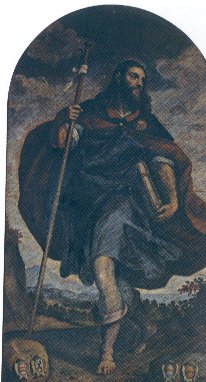
The document has listed down the modern errors; and it has clarified once more what is Truth. But if presented to the Catholic world, it might ask "What is truth?" Sounds familiar? Now that is the real problem. The world could again crucify the Truth. (Painting is "St. James the Great." by Palma Il Giovane, 16th century, greatly venerated in Compostela, Spain.)

Wednesday, July 26, 2006

The POPE and the religious SUPERIORS

The Pope met with more than a thousand religious superiors of both men and women and noticed the failed reforms that were initiated by some religious communities. Basing it on his earlier theological treatises, he noted their failure to offer the 'life-giving face of Christ.'

Then he encouraged them to a deeper fidelity to the Gospel and the Church. "To belong to the Lord, to live chaste lives, to be poor in spirit and obedient to Christ, deeper fidelity... " He was encouraging them to the theological virtue of faith. Why? Did he notice the absence of faith?

". . . To be a credible sign that the Gospel can be lived today. . . " That is Charity. He gave them the reason for their failed reforms. Either there was no reform or the reforms took a wrong turn. Instead of going back to the roots of Religious life and the roots of the Gospel which were necessary for the attainment of faith, Religious communities embraced the secular culture. Instead of going supernatural, they went secular. Isn't this nominalism? When and how did this happen?

Moral theologians noticed that there was a sudden change in the teaching of Catholic Doctrine after the Council of Trent. It could have started earlier. No one is blaming the Council which produced the richest documents, so much so there was no need for a new Council for the next 300 years. No one can really pinpoint how the change came about. But then, Trent moralists noticed the great divorce between Dogmatic and Moral theology, between Ascetical and Mystical theology, between Liturgy and Asceticism and between Old Testament and Evangelical morality. . . fragmented knowledge that is not Catholicism. From this divorce, a broken Church emerged. Moralists mentions William of Ocham and Scaramelli who started the divorce, Emmanuel Kant who finalized it and Abbe Loisy who nailed the coffin. By the end of the 17th century the divorce was complete and the Church was like a broken family. Such a family can only produce delinquent children.

Reformation is laborious job, and only God can reform the Church. He does it by raising up inspirational saints who inspires us to the perfection of Charity, like St. Joan of Arc. Or He raises up renewal saints who remind the Church of the right way of doing things and where she went wrong. Sometimes He raises up only one saint, like St. Alphonsus Liguori in his century. Sometimes, two saints, like St. Vianney, who wrote a simple and attractive catechism, and St. Therese who wrote on Charity in her "Story of a soul."

The consequent problem caused by the divorce between dogmatic and moral theology that occurred around the 15th century, wherewith this error was incorporated into most manuals of Moral theology taught to seminarians in all seminaries, is that most priests from that century up to the present seem to be ignorant of the complete content and appropriate method of teaching Catholic doctrine. So priests and parishioners have been ignorant of Catholic teachings, except for souls who learned, in a providential way, their religion from the Fathers, or from St. Alphonsus or through St. John Vianney and St. Therese.

God, aside from raising doctors of the Church, guided a group of theological professors to rediscover the proper way of teaching theology in Tubingen. They would teach a young priest named Joseph Ratzinger. But being overwhelmed by student activism, this era in that school in Tubingen, was short-lived. Fr. Joseph Ratzinger would one day compare the right from the wrong way of teaching in his "The New Evangelization" early in his papacy.

All of us are products of this great divorce. And this is the only reason why the Pope expressed his disappointment to the Religious Superiors for not having presented the life- giving, true face of Christ. Probably they have never met Him in faith due to their defective training.

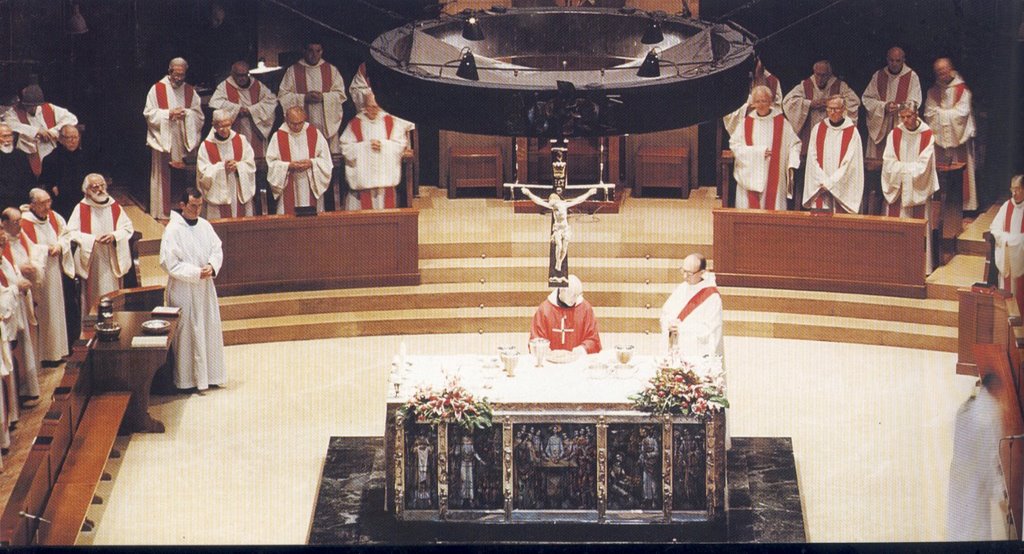
As usual, God has come to the rescue in directing the steps of the Church by raising the present Holy Father who with his Compendium, in imitation of John Vianney, and with his first encyclical "Deus Caritas est", in imitation of St.Therese, has corrected the error of Nominalism and is directing the barge of Christ towards God. (Picture is the priest-monks of Montserrat, Barcelona, Spain, concelebrating at Mass.)

Monday, July 10, 2006

SINS against CHARITY

As we have mentioned previously, if “Deus Caritas Est” were the only encyclical the Pope intends to write, he would have already given us the solution to all the world’s problems, because those problems are nothing but sins against Charity.

When Pope Benedict went to the Nazi extermination camp Auschwitz, they were expecting him to say some political statements like a condemnation of anti-semitism or Nazism. Instead he uttered an Augustinian thought: the nature of evil, the lack of charity due to man's tendency to deify himself (" if you eat this fruit of rebellion you will be like gods"). Germany fell because of the promise to be like gods.

Hatred has overwhelmed the world. It is everywhere. Hatred between races, hatred between religions, hatred between nations, between husband and wives, between parents and their children to mention a few. This hatred is diabolical since it is what the devil has towards men, knowing that man can go to heaven while he cannot. And since hatred is a passion gone berserk, no one needs to do anything wrong to earn another person’s hatred. Why should mothers abort their children? What have they done? It is this hatred that seems to come from nowhere that is motivating her. Come from nowhere? It comes from the absence of Charity. Evil is the absence of good. If you have no Charity you have hatred.

When someone can go to the extend of murdering a total stranger, can there be any other reason for this except the absence of Charity or Love? Without this explanation, the behaviour is bizarre.

Theft, like kidnappings, are symptoms of hatred. The thieves wait for you to earn your living and when you have saved a modest amount they deprive you of it. This is a behaviour completely devoid of love of neighbor, and therefore, is hatred.

Adultery, divorce, legal separation, annulment of marriages are acts completely devoid of love of neighbor and love of God. Thus, these are acts of hatred.

The collateral effects of studies on stem cells, cloning and in vitro fertilization are acts of hatred. How else can we describe the manner with which those fertilized eggs are disposed of, except that it is done by people who have too much love of self.

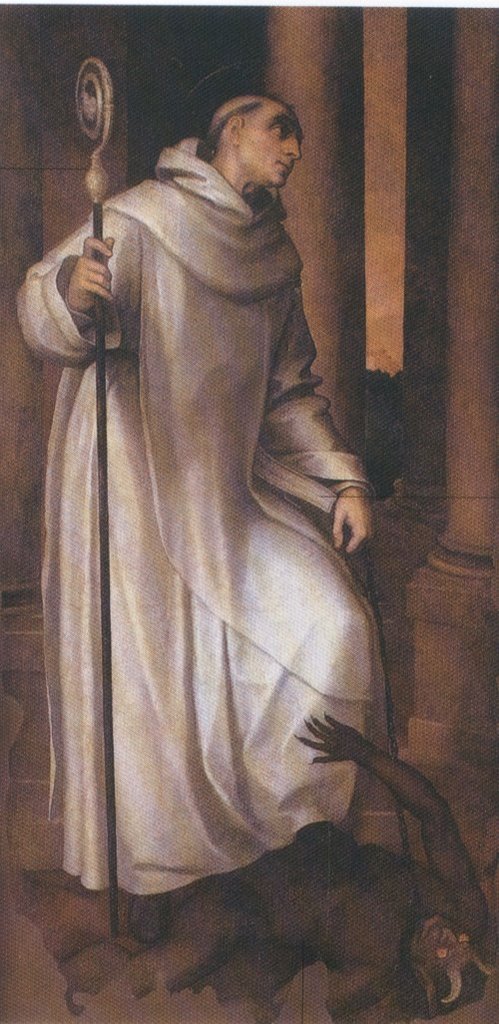
Within the Catholic Church, the absence of Charity is more pronounced because we have a standard to compare with. The Church when she was fervent, the Apostolic Church, the Church of the Fathers, the fervent communities and reformed communities has shown us how the Church should be : ”See how they loved one another.” (Painting is "St. Bernard Crushes the Devil," by Marcello Venusti, 1563.)

Thursday, June 29, 2006

The POPE in AUSCHWITZ

The first duty of the Pope and all bishops toward their flock is to give moral directions so that all may be directed towards a life of happiness, both here and in the life after. These moral directions must be based on Divine Revelation. While the Popes had done their jobs well, the same cannot be said of many bishops. Many have tried to give moral directions, but the morality of their directives is not Catholic enough. It is a bit shallow: probably rational, philosophical, psychological, sociological...but not Catholic.

The morality of an act is dependent on whether it leads us to beatitude, i.e. happiness, if possible, here on earth, and in the next. There are many ways of saying the same thing in the Catholic Church. We might say an act is moral if it builds Faith, Hope and Charity, or maybe if it is in accordance to the petitions of the Our Father.

When Pope Benedict went to Auschwitz, he put the blame for the Nazi's attempt to exterminate the Jews on their unconscious desire to exterminate the author of happiness, God. They wanted to author their own happiness. This is the eternal battle between the two cities: the city of God and the earthly city. Germany was trying to build an earthly city in defiance of the city of God. They were trying to create happiness for themselves in the midst of the sorrows of this life. They chose the hollow pleasures of this life instead of the hope held out to them by God.

St. Paul, in his way to Damascus, fell down from his horse and heard a voice: "Saul, Saul, why dost thou persecutest Me?" When Paul asked who art thou? The voice answered: "I am Jesus..."

Obviously, he who persecutes good Christians persecute the very person of Christ. And the Nazis killed a lot of Catholics. Killing Edith Stein and Maximilian Kolbe was an attempt to kill God.

But how about the non-Catholics? Well, they still have the image and likeness of God and to kill them is an attempt to kill God. To see Christ in good Christians and to see the image and likeness of God in others needs the theological and infused virtue of faith. So to kill a Christian or anybody for that matter shows the absence of faith.

Anyone in his right reason should know that it is futile to kill God, even without the infused virtue of faith. So why would they want to kill God?

God gave us a conscience by which, whether we like it or not, we know He exists and will reward the good and punish the evil. They were , in fact, silencing the voice of conscience that prods us to do God's will and not our will. They were trying to erase the image and likeness of God in them. And the viciousness of their attempts showed it was not working.

When the Pope made his statement in Auschwitz, the people's reaction to the Pope's statement was 'Why didn't he give a shallower reason?' Because, when the Church makes a moral judgment, it must be based on Divine Revelation and not on human science. And like all revealed truths, to understand them, one would need faith. The extermination of the Jew, or anyone for that matter, is immoral because they have the image and likeness of God. In fact it is for the same reason that we ought to love everyone.

In the battle against abortion, I often meet the argument 'the right to life' of a child as reason why it is immoral. But the fact that that foetus has the image and likeness of God is the better moral reason.

For the Pope to just make mention of 'Nazi Germany' and 'Jews' in his visit would have made his message merely political, or nationalisitic. In his message he went to the depths of Catholic moral theology, the way the Fathers of the Church used to do, but now abandoned by Catholic moralists since the 15th century.

The morality of the Catholic Church may also be based on the will of God versus the will of man. And so when we hear that family planning is immoral, it is because it is an attempt to frustrate the will of God on the primary goal of the marriage privilege and not so much because it violates the child's right to life. It is choosing one's will over God's will. With this moral basis then any attempt to frustrate God's plan is immoral. (And this would include the approved Catholic family-planning method whose goal is to frustrate God's will). When a mother aborts her child, certainly it is not because he is a Jew, but simply because she does not want the child. Unfortunately Hitler did not like the Jews: Man's will versus God's will. Back to the dictatorship of relativism.

The criterion of morality since the time of Christ, through the apostles and up to the middle ages has been: what will bring us true happiness. Today the basis of morality for most is: what is cheaper or what will maximize my enjoyment of the world, my will versus God's will.

Hitler did not only do his own will; he imposed it on Germany and tried to impose it on the whole Europe. The world was defended by England whose religion was founded by a king who, also, wanting to do his own will, separated himself from Rome and tried to impose that religion on England.

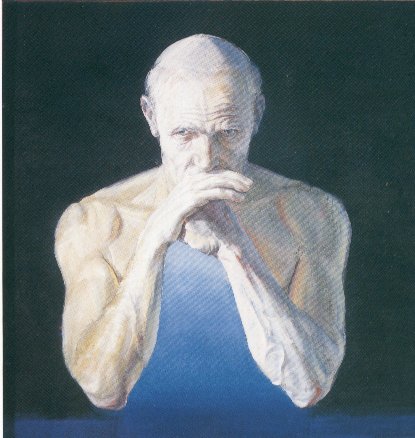
Who will save us from those who say "my will be done?" Perhaps the son of a Bavarian policeman who opposed Hitler. (Painting by Leszek Sobocki of Carol Wojtyla symbolizing the Polish people, stripped, first, by the Germans and then by the communists. Note the white papal skull cap).

Wednesday, May 31, 2006

THE POPE IN POLAND.

Charity builds up on faith. And so the truth of this doctrine has once again been clearly shown by our beloved Holy Father, Pope Benedict XVI, in his recent trip to Poland.

The faith of the Polish people was evident in their decorum during the Papal Mass. But to share such faith with others, it has to be stronger, meaning, it should be filled with Charity, so His Hoiliness encouraged them. It is only when faith is adorned with Charity that others can see Christ....and eventually follow Christ. St. Paul wrote: "Follow me because I follow Christ." They were following, not St. Paul, but Christ who they see in Paul who was filled with Charity.

Faith may be strengthened in two ways. One is when God grants the soul graces in the form of dilectations leading to the prayer of quiet. This is like putting a carrot stick in front of a donkey so as to make it move. Dilectations attract the soul to go forward. The other way is like giving a soul a little push from behind through personal studies of the writings of the Saints or the Catechism of the Church.

Let us leave it up to God, through His mercy, if He wills to give us those dilectations. Rather, let us concentrate on what we can do: study.

It is said that God ordinarily attracts the soul through the growth of faith by dilectations. But if God sees that the soul has to grow more in humility He obliges the soul to learn, not directly from Him but to learn through other men who had gone through the same route, like St. Basil, Leo the Great, Dionysius the Areopagite and St. Thomas of Aquinas.....through studies.

Though St. Thomas learned from the Benedictines of Monte Cassino the way of increasing one's faith through humility and prayer, he learned later on that studies (like apologetics, exegesis, speculative theology) can help attain faith, like a push from behind. He learned this as a Dominican and the Order had made this practice a part of their spirituality. The Benedictines have a regimen of studies but not as intense as St. Thomas envisioned it.

Here in our part of the world, we have tried the push from behind, i.e. using the help of studies by publishing a newsletter on the Catholic Faith taken from the writings of the Fathers of the Church subscribed mainly by the Catholic Diocesan priests. And among others things we have started distributing copies of the Compedium of the Catechism of the Catholic Church by Pope Benedict XVI to all who request. These are all free of charge because God gives His graces free. This way Catholics would have no excuse in being ignorant.

We cannot love God unless we know God. Studies should encourage the faith that instils the infused knowledge of God. These studies must, however, be handled with caution since they can puff up, as St. Paul warns us. Even God's given dilectation can lose its attraction if we put our attention on the dilectation rather than on the God of consolation.

Imagine the Catholic Faith as a big chunk of knowledge over and above the capabilities of human nature. We need faith to go from the natural to the supernatural level. But Catholicism is still a big chunk to swallow. So we must nip on it little by little, taking small bites and chewing it well. This is equivalent to meditation that is the core of theological study. This is also similar to the description of the creation of the world. To adapt to the weakness of our minds God made it little by little, bit by bit, and saw that every little thing He created was good. And those bite- size Catholic truths are surely good to eat.

After we have tasted it little by little, like God's creation, we should put them back together and look at it as a whole, as God did, when at the end (of creation), He looked at it and saw that everything He made was very good. This is contemplation. This is being in the state of Charity.

Yes, the Pope encouraged the Poles to be strong in their faith that they may be able to share their faith with Europe and, hopefully, with the whole world. The only way to make one's faith strong is to reach Charity, to be a contemplative. To share our Catholic Faith with others we must teach the essence of Catholicism which is summarized in love of God and love of neighbor. Isn't this Charity? But only those who have reached Charity can teach Charity. Needless to say they are, also, the best teachers of faith.

To strengthen Faith there are the writings of the Fathers of the Church, like St. Basil; there are the writings of the Doctors of the Church, like St. Francis de Sales. All the Saints wrote on Faith and Charity. We have no excuse in not knowing our Faith; worse, in not reaching Charity.

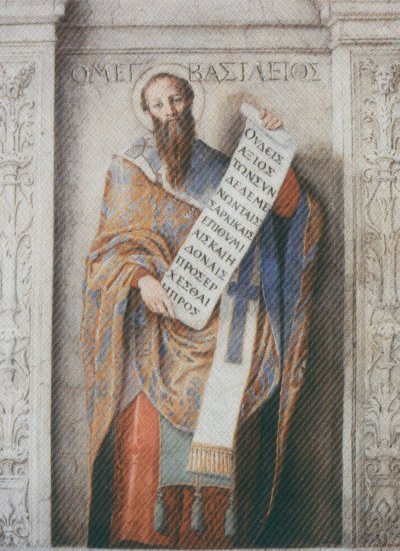
We must have Faith. But others will only notice and follow the object of our faith, Jesus Christ, if we, also, have Charity.(Statue of St. Basil by Domenichino, 1608, Grottaferrata Abbey.)

Saturday, May 20, 2006

CHARITY - UNION OF OUR WILLS WITH GOD

Happiness is when we get everything we want .... as long as we want the right things. Only God knows the right things. Being powerful He can get everything He wants, "In heaven and on earth, whatever God willed He has done," the psalm says. "Nothing happens in heaven or on earth, unless God either propitiously does it or justly permits it," states the Council of Tuzey.

If this is so wouldn't it be a great idea if we just unite our wills with His? Because this way, we can get everything we want, the right things at that, and that would be happiness. Well, that is also Charity when we have united our wills with God's will.

This is a little secret that St. Therese knew. As young as five, she prayed to God that she might never do her own will but God's will only. We should start training children this early. Because children will believe anything from authority. And if we tell them God's will is the best for them they will believe it and this should put them well on the road to Charity even at an early age.

We grown ups, bombarded by advertisements saying 'want me, want me,' no longer believe in authority. We judge things by concupiscence. And wanting to do God's will has never entered our minds. Satisfying our concupiscence is our only motivation and the cause of all our sorrows because we ourselves discover that the things that satisfy our concupiscence do not give us happiness.

Our intellect and will are attracted to truth and to the good. So they should be attracted to God who is the ultimate truth and good. But man is man and his faculties are natural and are unable to go beyond its human limits. It needs grace to leave its natural confines and soar up to the level of the divine. We have sanctifying grace to raise man to the supernatural level wherewith he becomes capable of receiving the infused virtue of Charity. It is in this level that man's will is united with God as a drop of water is united with the ocean.

Spiritual writers often refer to this as "conformity to the will of God" and a good ascetical exercise. This is fine. Except that here we are talking of two wills, God's will and my will. And the exercise consist in comforming my will continuously with God's will. St. Alphonsus Liguori talks, instead, of "uniformity with God's will." Here there is only one will: God's will; I do not have any will. Of course my will is there intact within me. But I act as if it does not exist. This latter is simpler and more efficient in uniting our will with God's will, the essence of Charity.

In the spiritual life these are the two antagonists: "Thy will be done" versus "my will be done." It is a furious battle that usually ends with man demanding that God do his will. It is worst than rebellion. It is an attempt to subdue God. Man wants God to submit His will to his. That is the way of a reprobate.

Tuesday, May 16, 2006

The Charity of God

Judas delivered up Christ out of greed. The Jews delivered up Christ out of envy. Pilate delivered up Christ out of worldly fear for Caesar. Christ delivered Himself up out of Charity. And God the Father delivered up His Son out of Charity.

If man knew how much God loved him, he would respond in kind. In His passion both Christ and God the Father showed how much Charity they had for mankind. But at the same time through the passion, they showed how man should love God in return. And so the death of Christ by crucifixion, being the most convincing manner by which God could prove His love for man is the most fitting way in which Christ worked out the manner by which man can love God in return. He died for us while we were sinners, that He may give us the grace to be His friends.

Seeing what price Christ paid to redeem us should inspire us to abstain from all sin. What should inspire us is not the ugliness of sin but the beauty and attractiveness of Charity. Charity, however, is a Divine Act. A study of theology cannot teach us Charity. It is a gift. So our concentration must be how to be worthy of it. Charity cannot be merited. It is Charity that merits for us.

To reach Charity we must go through Faith and Hope. And Faith is the process by which we die to our natural selves to be able to be raised up by sanctifying grace which in turn will make us capable of receiving the supernatural gift of Charity. "He who loses his life will find it."

The natural self must die to rise up the spiritual level for there Charity abides. And humility is the process by which we die little by little. In ascetics this is commonly described as "white martyrdom" or acts of mortification.

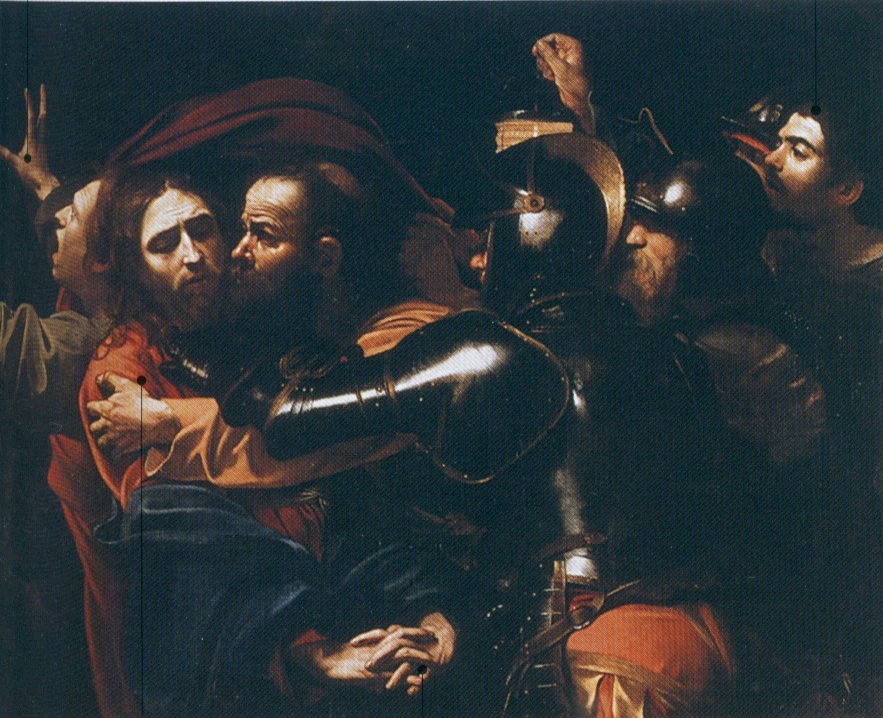
Should we wonder why, if we asked Christ what we should study, He did not answer "A course in Theology." He said: "Learn from Me for I am meek and humble of heart." Meekness and humility are the same. That is what we must learn to become worthy of God's choicest graces....the greatest of which is Charity. (Painting is "The Betrayal of Christ," by Caravaggio, 1602.)